Wednesday, 16 October 2013

Revision: TO BE, TO HAVE GOT, the POSSESSIVE ADJECTIVES and 'S POSSESSIVE


Los de 1 ESO podéis preparar el examen de la unidad 1 con estas actividades.

To BE
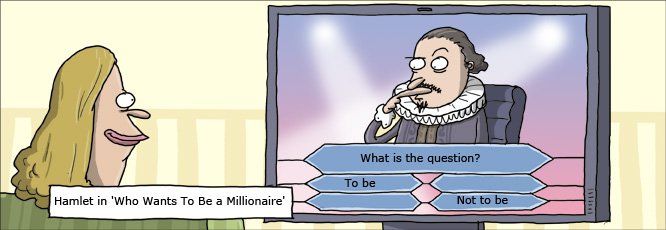

Here are some exercises to revise the verb TO BE.

To HAVE GOT

Click on these link to revise the verb HAVE GOT

The POSSESSIVE ADJECTIVES

With these exercises you can revise the POSSESSIVE ADJECTIVES
'S POSSESSIVE

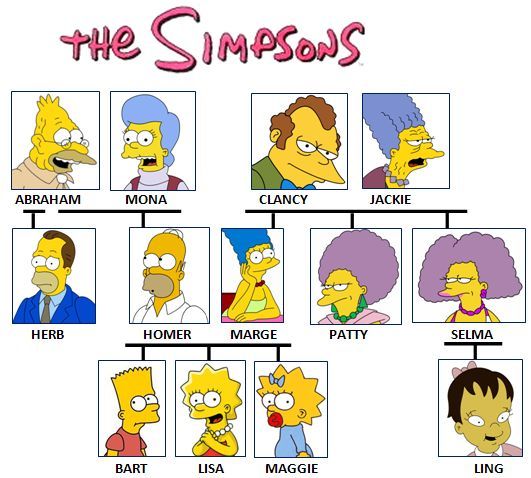
These are exercises of the 'S POSSESSIVE


Wednesday, 27 February 2013

Present Simple Word order


Los de 1 ESO aquí encontraréis información para preparar el examen de la Unidad 4.

Use

We use the present simple to talk about daily routines and activities.
  • I have a shower every day
  • You never do your homework after school
  • Home doesn't go to work in a BMW
Repasa más vocabulario de las Routines and Daily Activities con esta presentación

Word Order

Here is a presentation to learn about the word order in present simple sentences.
Fíjate sobre todo en el uso del auxiliary y el verb.
REMEMBER! In Wh- Questions we ask about a part of the sentence we don't know.
Fíjate en los huecos y la Question Word que utilizamos

Question word
Auxiliary verb
Subject
Main verb
Object
Place
time

Does
Bart
meet
his friends
at the park
every sunday?
Who
does
Bart
meet

at the park
every sunday?
Where
does
Bart
meet
his friends

every sunday?
How often
does
Bart
meet
his friends
at the park?


Éstas son las Question Words más comunes. You must know all of them!

Sunday, 28 October 2012

There is / There are + a (an), some, any + Countable & Uncountable Nouns

En clase hemos aprendido que There is / There are sirven para decir lo que "hay" y There isn't / There aren't lo que "no hay".
Las cosas que "hay" o que "no hay" pueden ser Countable o Uncountable.
Y de todo ello depende que utilicemos bien a (an), some y any.
En la siguiente presentación podrás estudiar cómo se utilizan.


Aquí tienes un video gracioso(?) que también lo explica. Cuidado con el acento inglés!


Y finalmente unos ejercicios para que practiques lo aprendido:

Present Simple vs Present Continuous


Estudia esta comparativa entre el Present Simple y el Present Continuous:

Diferencias en su forma:

Simple Present Present Continuous
Base form
(3rd person singular: infinitive + 's')
I speak
you speak
he / she / it speaks
we speak
they speak
form of 'be' and verb + ing
I am speaking
you are speaking
he / she / it is speaking
we are speaking
they are speaking
Exceptions
Exceptions when adding 's' :
  • After o, ch, sh or s, add es.
    Example: do - he does; wash - she washes
  • After a consonant, the final consonant y becomes ie. (but: not after a vowel)
    Example: worry - he worries
    but: play - he plays
Exceptions when adding 'ing' :
  • Silent e is dropped. (but: does not apply for -ee)
    Example: come - coming
    but: agree - agreeing
  • After a short, stressed vowel, the final consonant is doubled.
    Example: sit – sitting, put – putting
  • Final ie becomes y.
    Example: lie - lying

Diferencias en su uso:

Simple Present Present Progressive
in general (often, never)
Colin plays football every Tuesday.
present actions happening one after another
First Colin plays football, then he watches TV.
right now
Look! Colin is playing football now.
also for several actions happening at the same time
Colin is playing football and Anne is watching.
Signal words
  • always
  • every ...
  • often
  • normally
  • usually
  • sometimes
  • seldom
  • never
  • first
  • then
  • at the moment
  • at this moment
  • today
  • now
  • right now
  • Listen!
  • Look!


Las Signal Words hacen referencia al tiempo al que se realiza la acción. Utilízalas para decidir si utilizar el Present Simple o el Present Continuous.

Aquí tienes más información y ejercicios para diferenciar entre Present Simple y el Present Continuous.

Wednesday, 26 September 2012

Furniture and Prepositions of Place

Aquí tienes las Prepositions of Place más utilizadas. Los dibujos siempre te ayudarán a aprender su significado. Después podrás practicar con algunos ejercicios.

on
sobre

in
dentro de

above
encima de

under
debajo de

in front of

opposite
enfrente de

delante de

behind
detrás de

beside
near
next to
al lado de
cerca de
junto a

between
entre (dos cosas)

among
entre (varias cosas)

Ahora, haz el siguiente ejercicio en el que puedes practicar vocabulario sobre Furniture de una manera divertida.
Puedes ver un video (aunque es un poco infantil, puedes aprender las Prepositions of Place repitiéndolas) y practicar con más ejercicios aquí:
Y este último ejercicio es para los más fans de las Prepositions of Place:

Wednesday, 30 May 2012

Form of the Present Perfect


Form of Present Perfect

Positive
Negative
Question
I / you / we / they
I have spoken.
I have not spoken.
Have I spoken?
he / she / it
He has spoken.
He has not spoken.
Has he spoken?
For irregular verbs, use the participle form (see list of irregular verbs, 3rd column).
For regular verbs, just add “ed”.
Exceptions in Spelling when Adding ‘ed’
Exceptions in spelling when adding ed
Example
after a final e only add d
love – loved
final consonant after a short, stressed vowel
or l as final consonant after a vowel is doubled
admit – admitted
travel – travelled
final y after a consonant becomes i
hurry – hurried


Practise the irregular verbs

Thursday, 24 May 2012